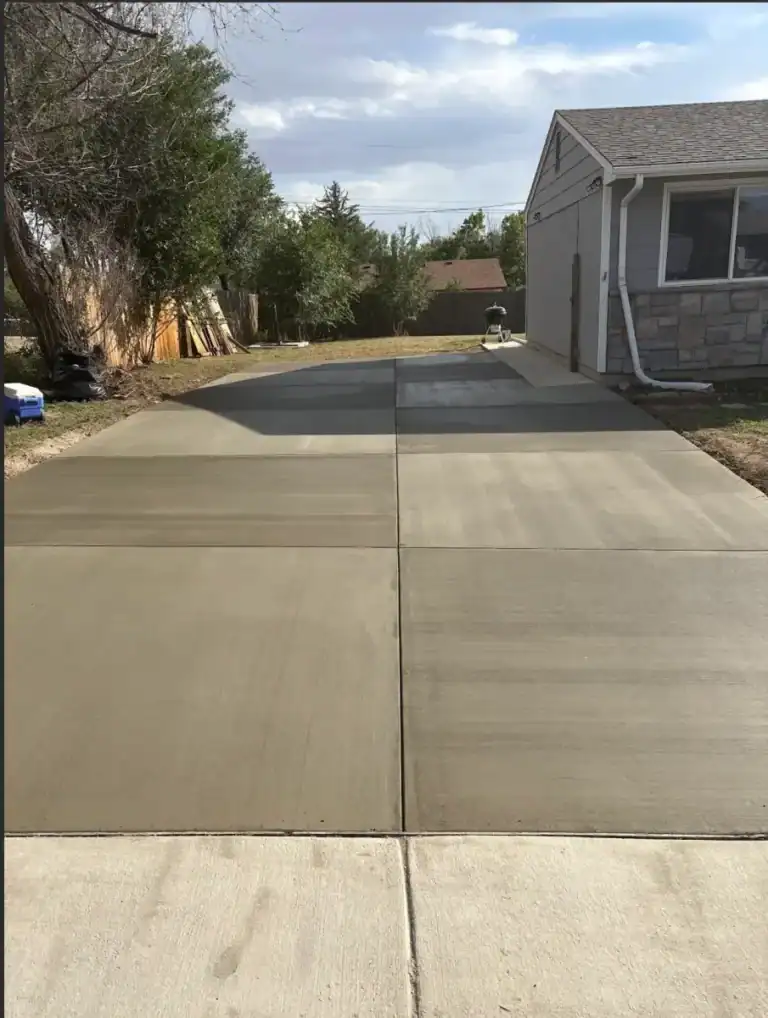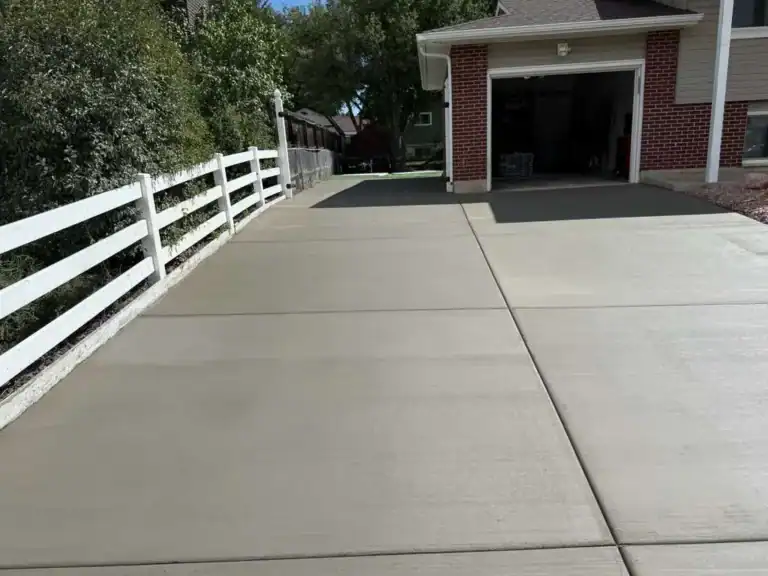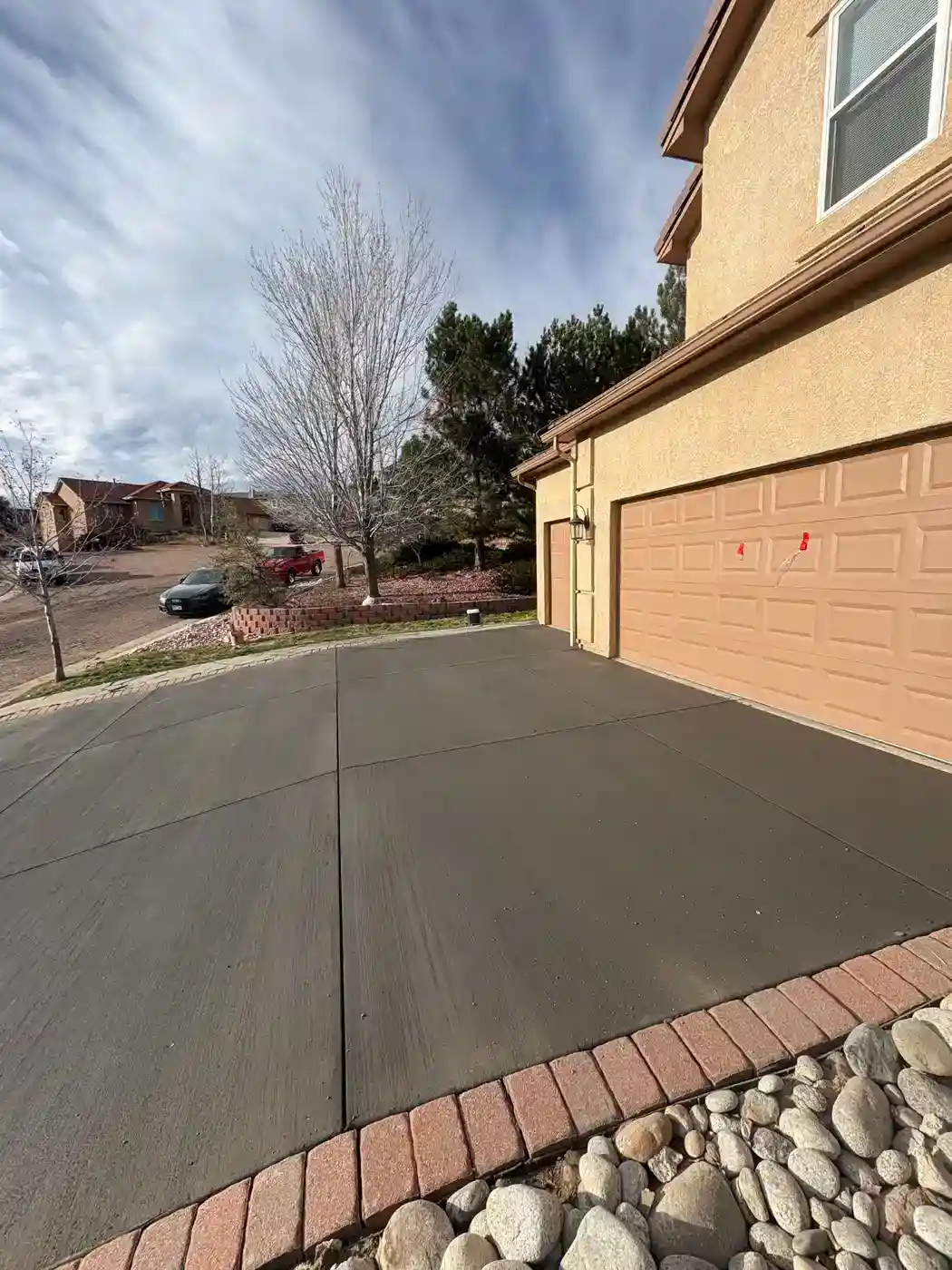
Your concrete driveway faces a unique challenge in Colorado: well over 100 freeze-thaw cycles every year. Without a little care, those cycles can turn a small crack into an expensive repair in a few seasons.
The good news is that a concrete driveway built right needs very little from you. Here’s what actually matters, and what you can skip.
Colorado’s Front Range sees some of the most dramatic temperature swings in the country. A single day can run from 20°F to 60°F, so water that melted into the surface at noon freezes and expands in it by midnight.
Understanding Freeze-Thaw Damage
When water seeps into the tiny pores in concrete and freezes, it expands by about 9%. That pressure is what scales and spalls a surface over time. The real defense against it is built into the slab: air-entrained concrete has microscopic bubbles that give the ice room to expand. Maintenance is about not making the slab’s job harder.
Signs of Freeze-Thaw Damage
Look for these each spring:
- Surface flaking or spalling (peeling layers)
- New cracks or widening of existing cracks
- Pitting or small holes in the surface
- Stone showing through where the surface has worn away
4 Essential Maintenance Tips
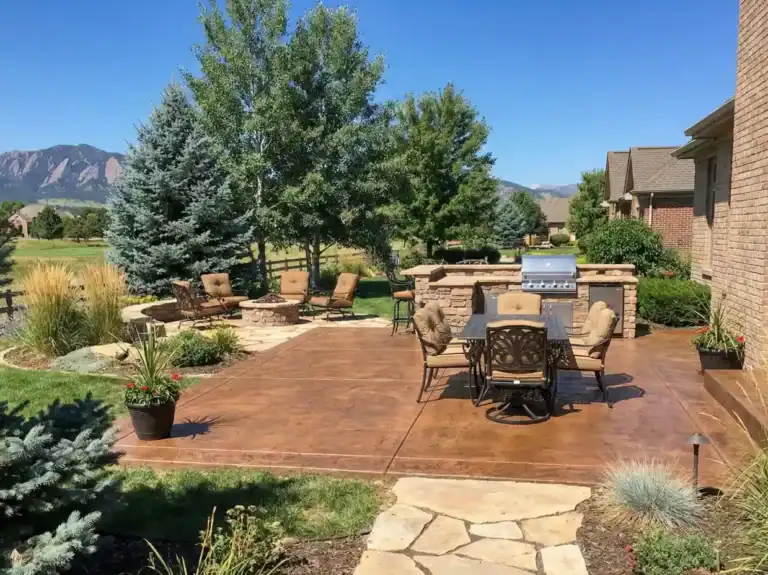
On a grey broom-finish driveway, air entrainment in the mix is the freeze-thaw defense, and we tell our customers not to buy a sealer program for it. Anyone selling you a recurring seal coat on plain grey concrete is selling you something you don’t need. Stamped and colored driveways are different: the sealer protects the color. Those get sealed about three weeks after the pour and resealed every 2-3 years, ideally in late September or early October, before the first freeze.
Remove snow within 24 hours of a storm. Standing snow melts during the day, soaks into the surface, and freezes overnight. Use a plastic shovel, not metal, to avoid scratching the surface.
Rock salt and chemical deicers accelerate deterioration. Use no deicers at all the first winter, just sand or kitty litter for traction. After year one, use them sparingly if at all (magnesium chloride is the harshest on concrete), and never on colored or stamped concrete.
Rinse or low-pressure wash the driveway once a year to remove grit, dirt, and oil. Spring is the ideal time, after winter grime has built up. Clean automotive fluid spills within a day or two; concrete is porous and they stain.
The Numbers Behind Proper Care
When to Call a Professional
Some damage is past homeowner maintenance. Have a concrete contractor look at it if you notice:
- Cracks wider than 1/4 inch, or with one side higher than the other
- Heaving or sunken sections
- Large areas of spalling
- Water pooling in the same spots after every rain
- Cracks that keep returning after repair
Water running under the slab all winter turns into heaving and a replacement, which runs about $9,000 to $13,000 for a two-car driveway. Catching drainage and settling problems early is what keeps a driveway from getting there. Our guide on whether to repair or replace walks through where that line is.
Seasonal Maintenance Calendar
Spring (March-April)
Inspect for winter damage and rinse or wash the surface. This is when freeze-thaw damage shows up, so note any new cracks, spalling, or settling.
Summer (June-August)
Keep the surface clean and deal with oil stains promptly.
Fall (September-October)
If you have a stamped or colored driveway on its 2-3 year cycle, reseal before the first freeze. Trim back vegetation at the edges and make sure water still drains off the slab and away from the garage.
Winter (November-February)
Clear snow promptly, skip the salt, and use sand for traction.
- Plain grey concrete doesn’t need a sealer; reseal stamped and colored finishes every 2-3 years in fall
- No deicers the first winter, sand only; after that, use them sparingly if at all (mag chloride is the harshest)
- Clear snow within 24 hours with a plastic shovel
- A driveway built with air-entrained 4,000 PSI concrete and fiber rebar lasts 25-30 years with this much care
Driveway Past the Point of Maintenance?
Get Free EstimateRelated: Concrete Driveway Services | Protect Your Driveway This Winter | Repair or Replace Your Driveway?
About Creststone Concrete: We specialize in concrete driveways, patios, and decorative concrete for homeowners across Colorado’s Front Range. We understand Colorado’s climate and build concrete that lasts.