Asphalt or concrete? It’s the first decision most Colorado Springs homeowners face when replacing a driveway. Both are proven materials available from local contractors, but they perform very differently in Colorado’s climate, and the day-one price doesn’t tell the whole story. This guide breaks down the real differences in cost, lifespan, maintenance, and value so you can make the right call for your home.
Asphalt costs less upfront, roughly $7-13 per square foot versus $12-20 for plain concrete depending on driveway size (about $20 on a typical two-car). But concrete lasts about twice as long (30-40 years versus 15-20), needs a fraction of the maintenance, and handles Colorado’s UV, temperature swings, and summer heat far better. Over 30 years, asphalt typically gets installed twice and sealcoated a dozen times. Concrete gets installed once. For most homeowners planning to stay more than a few years, concrete is the better investment.
Upfront Cost: Asphalt vs Concrete Driveway
Asphalt: A new asphalt driveway runs $7 to $13 per square foot installed. For a standard two-car driveway (400-600 sq ft), that’s roughly $3,500 to $7,000.
Concrete: A plain broom-finish concrete driveway in Colorado Springs runs about $20 per square foot on a typical two-car driveway, or $8,000 to $12,000. Large driveways get a lower rate, $12-15 per square foot, which narrows the gap with asphalt. Tearing out an old surface adds roughly $2 per square foot. Stamped and colored finishes cost considerably more. See our concrete driveway cost guide for the full breakdown.
So asphalt’s price advantage is real: on day one, concrete costs roughly 1.5 to 2 times as much, depending on size. The question is what happens over the next 30 years.
Lifespan: This Is Where the Math Changes
- Asphalt: 15-20 years with regular maintenance. In Colorado’s sun, closer to 15.
- Concrete: 30-40 years when properly built with 4,000 PSI air-entrained concrete and fiber rebar reinforcement.
Highway departments have tracked this for decades on real pavement, and the pattern is consistent: concrete goes far longer between major repairs than asphalt. For your driveway it means that if you stay in the house 20 years, an asphalt driveway gets completely replaced at least once. A concrete driveway doesn’t.
A 500 sq ft asphalt driveway installed today for around $5,000 will need full replacement in 15-20 years, at whatever asphalt costs then, plus removal. Add a sealcoat every 2-3 years and annual crack filling in between, and the day-one savings are gone well before year 20. One concrete driveway covers the same 30 years with no second install.
How Colorado’s Climate Affects Each Material
UV at Altitude
Sunlight at 6,000+ feet is noticeably stronger than at sea level, and it’s the biggest threat to asphalt in Colorado. Asphalt is petroleum-based. UV breaks down the oil binders that keep it flexible and waterproof, so the surface turns gray and brittle within a few years without sealcoating, and then develops the interconnected “alligator” cracks you see on every older asphalt driveway in town. Concrete has no oil binders to break down. UV lightens the surface slightly over decades and that’s all.
Temperature Swings and Freeze-Thaw
Colorado Springs regularly sees 30-40 degree swings in a single day and well over 100 freeze-thaw cycles a year. Daily expansion and contraction fatigues asphalt year-round; once UV has made it brittle, cracks open, water gets in, freezes, and widens them. Concrete built for Colorado handles this by design: air-entrained concrete has microscopic bubbles that give freezing water room to expand, and control joints let the slab move where the contractor wants it to instead of cracking at random.
Summer Heat
Asphalt softens in heat. On a sunny Colorado summer day its surface can pass 140°F and the binder becomes pliable. Park the same vehicle in the same spot every day and you get rutting, two permanent grooves from the street to the garage that then collect water and accelerate everything above. Concrete doesn’t soften. It looks the same after a 95-degree day as it did before.
Ground Movement
Asphalt’s flexibility lets it bend with modest ground movement rather than crack, and that’s a fair point in its favor. But the same flexibility is why it ruts and deforms under load. A reinforced concrete slab on graded, compacted ground spreads loads over a wide footprint and stays flat.
Maintenance: What Each Material Demands
Asphalt:
- Sealcoating every 2-3 years in Colorado. Not optional here; without it, UV destroys the surface in a few years.
- Crack filling every fall before the first freeze.
- Resurfacing around year 10-15, which buys a few more years before full replacement.
Concrete:
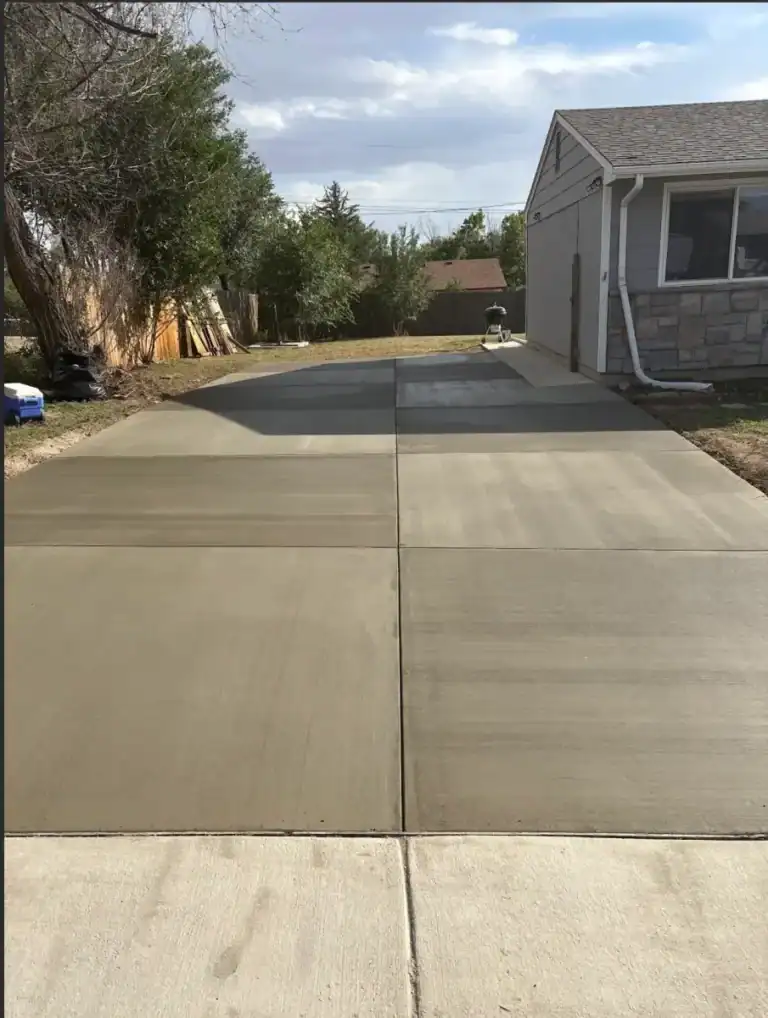
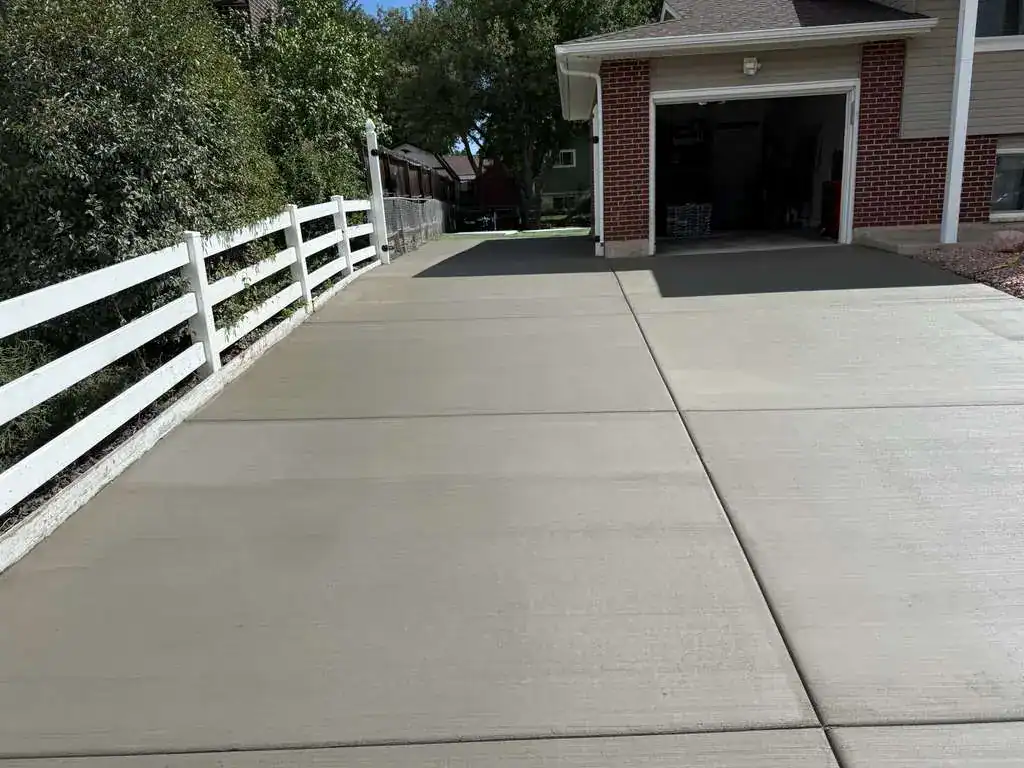
- Plain grey broom finish: Nothing on a schedule. Air entrainment in the mix is the freeze-thaw defense, and we tell our customers not to buy a sealer program for grey concrete.
- Stamped or colored finishes: Reseal every 2-3 years to protect the color.
- Keep control joints clear so they drain. With proper installation, cracking is rare.
Asphalt’s maintenance is a recurring bill for the life of the driveway. Concrete’s is close to zero on a grey driveway.
Appearance and Curb Appeal
Asphalt comes in one color, black, and fades to gray within a few years. Sealcoating temporarily brings the color back. There are no pattern, texture, or color options.
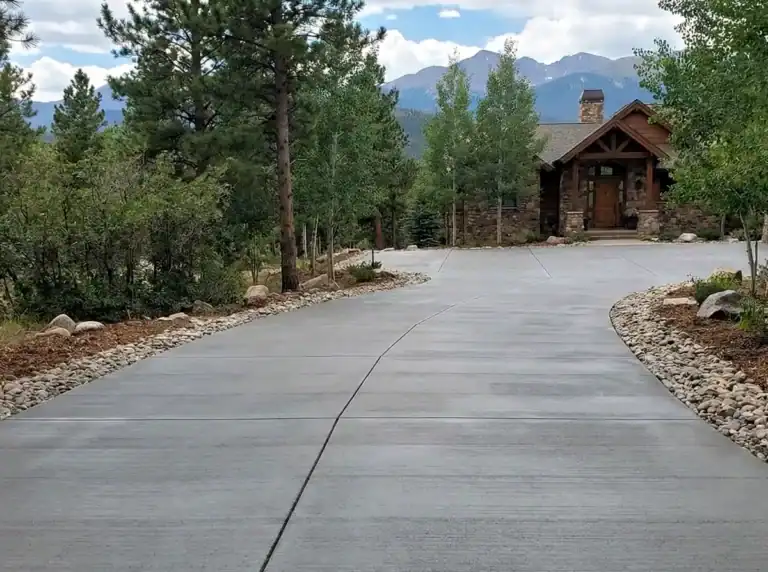
Concrete offers a broom finish, integral color that runs through the slab, and stamped patterns like ashlar slate and roman slate that mimic natural stone. In Colorado Springs neighborhoods where curb appeal drives value, that flexibility matters. Most newer subdivisions and higher-end homes here have concrete driveways; it’s the expected standard. Asphalt is more common on rural properties and in older areas.
Resale Value
A well-built concrete driveway still has 15-20 years of life left when you sell after 15 years, and buyers see it as a feature. An asphalt driveway at 15 years is approaching end of life, and inspectors and buyers price in the replacement. A cracked, faded driveway of either kind signals deferred maintenance; the difference is that concrete takes decades to get there.
When Asphalt Actually Makes Sense
We pour concrete driveways, so we’re biased. But there are situations where asphalt is the smarter choice:
- You’re selling within a few years. Asphalt gets you a fresh, paved surface for the listing at the lowest cost.
- It’s a long rural driveway. Over 1,000 square feet, concrete’s rate drops to $12-15, but the per-foot difference still adds up to real money at that scale.
- You need it drivable fast. Asphalt takes traffic in 2-3 days. Concrete needs 7-14 days of curing.
- Day-one price is the only priority. Asphalt is the cheapest way to get a paved driveway today.
When Concrete Is the Better Investment
- You plan to stay 10+ years. One concrete driveway covers your whole time in the home. Asphalt means a full replacement somewhere in that span.
- You want to stop thinking about your driveway. No sealcoating cycle, no annual crack filling, no resurfacing.
- Curb appeal matters. Color and stamped finishes complement the house. Asphalt looks the same on every house.
- You’re in a typical Colorado Springs neighborhood. Concrete is the standard here, and matching it protects your home’s value.
What About Asphalt Over Old Concrete?
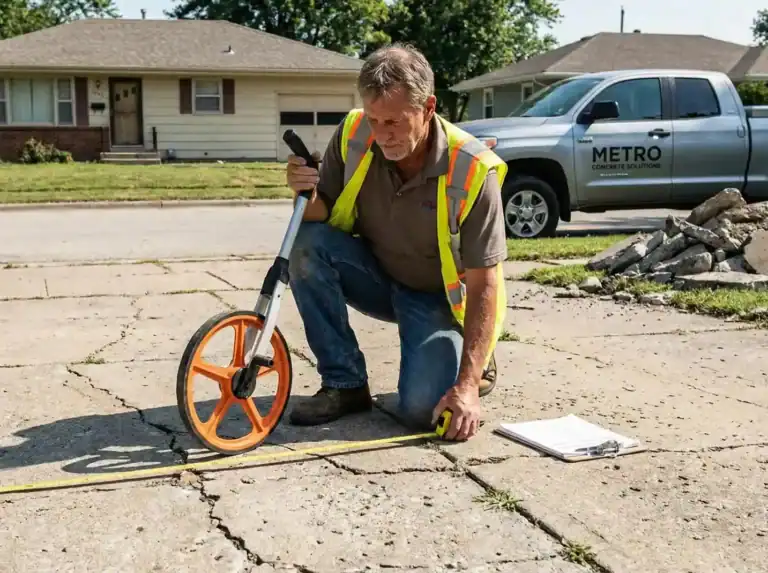
Some homeowners consider paving asphalt over a failing concrete driveway to skip the tear-out. It’s almost always a mistake. The concrete underneath keeps moving and its cracks telegraph through the asphalt within a year or three, the two materials expand at different rates so the overlay delaminates, and raising the surface creates drainage problems at the garage. Most reputable contractors won’t do it. If the old concrete is failing, remove it and put down a new surface, whichever one you choose.
The Bottom Line for Colorado Springs Homeowners
Asphalt is cheaper on day one. Concrete is cheaper over the life of your home. In Colorado’s climate, with intense UV at altitude, daily temperature swings, and hot summers, concrete’s advantages get bigger and asphalt’s weaknesses show up sooner. For most Colorado Springs homeowners planning to stay more than a few years, a concrete driveway is the better investment: you pay more upfront for a surface that lasts twice as long, needs almost no maintenance, and adds more to your home’s value.
- Asphalt runs $7-13/sq ft installed; plain concrete $12-20/sq ft depending on size, stamped and colored more
- Concrete lasts 30-40 years versus 15-20 for asphalt, so asphalt gets installed twice in the life of one concrete driveway
- Colorado’s UV, daily temperature swings, and summer heat degrade asphalt fast: fading, alligator cracking, and rutting
- Asphalt needs sealcoating every 2-3 years, annual crack filling, and resurfacing around year 10-15; grey concrete needs nothing on a schedule
- Concrete offers color and stamped finishes; asphalt is black only
- Concrete is the standard in most Colorado Springs neighborhoods
- Asphalt makes sense for short-term ownership, long rural driveways, or when day-one price is the only priority
Get a Free Concrete Driveway Estimate
Request Free QuoteRelated: Concrete Driveway Services | Concrete Driveway Cost Guide | Repair or Replace Your Driveway?