A concrete patio transforms your backyard into functional outdoor living space—and in Colorado, where we enjoy abundant sunshine and mild temperatures for much of the year, that’s space you’ll actually use. Whether you’re dreaming of a simple entertaining area or a complete outdoor kitchen setup, concrete offers the durability, design flexibility, and value that Colorado homeowners need.
This guide covers the most popular concrete patio styles, patterns, and design ideas that work well in our climate, plus the Colorado-specific considerations that will help your patio last for decades.
Concrete patios offer excellent durability in Colorado’s challenging climate when properly installed. With the right mix design (air-entrained, 4,000+ PSI), adequate thickness, and proper sealing, a concrete patio can last 25-30 years or more—outlasting wood decks and requiring less maintenance than many alternatives.
Popular Concrete Patio Styles
Concrete isn’t just gray slabs anymore. Today’s options range from simple and affordable to elaborate designs that rival natural stone. Here are the most popular styles for Colorado homes:
Broom Finish (Standard Concrete)
The classic choice. A broom finish creates a lightly textured surface by dragging a broom across the wet concrete. This simple technique provides:
- Excellent slip resistance — The texture provides grip, even when wet
- Affordable pricing — $6 to $12 per square foot installed
- Proven durability — No decorative surface to wear away
- Easy maintenance — Simple to clean and reseal
Broom finish works well for large patios where budget matters, or as a base with decorative borders. Don’t underestimate the clean, classic look of well-executed standard concrete.
Stamped Concrete
Stamped concrete uses specialized stamps and coloring techniques to mimic the look of natural stone, brick, or wood—at a fraction of the cost. This is Colorado’s most popular decorative concrete option because it offers high-end aesthetics with concrete’s durability.
The process involves pressing patterns into freshly poured concrete, then applying color hardeners and release agents to create realistic textures and tones. A quality stamped patio can be nearly indistinguishable from the materials it mimics.
Most Popular Stamped Patterns
Ashlar Slate — Often called “the king of stamped concrete,” ashlar slate creates a natural, square-cut stone appearance. The pattern features mixed stone sizes placed sequentially for an elegant, timeless look that complements both traditional and modern Colorado homes.
Flagstone — Replicates the irregular, random shapes of natural flagstone. This pattern blends beautifully with Colorado’s landscape—perfect for homes backing to open space or with natural rock features in the yard.
Wood Plank — Achieves the warm look of a wood deck without the maintenance headaches. Wood plank stamped concrete won’t rot, warp, splinter, or need annual staining—major advantages in Colorado’s intense UV environment and variable moisture.
Cobblestone — Evokes old-world European charm with its rounded, irregular stone pattern. Popular for patios with a rustic or cottage aesthetic.
Brick Patterns — From traditional running bond to herringbone and basket weave, brick patterns offer clean, structured designs that suit both traditional and contemporary homes.
A properly installed and maintained stamped concrete patio can last 25-30 years. The keys are quality installation with adequate thickness and reinforcement, plus resealing every 2-3 years to protect the color and surface from Colorado’s UV exposure and freeze-thaw cycles.
Exposed Aggregate
Exposed aggregate reveals the natural stones within the concrete mix, creating a textured, decorative surface. The top layer of cement paste is washed away before it fully cures, exposing the aggregate (small stones, pebbles, or crushed rock) beneath.
This finish is particularly popular in Colorado because:
- Natural aesthetic — The visible stones complement Colorado’s mountain landscape
- Excellent slip resistance — The textured surface provides superior traction
- Exceptional durability — Can last 30-50 years with proper care
- Hides imperfections — Minor surface wear is less noticeable than on smooth concrete
The textured surface of exposed aggregate can be uncomfortable for barefoot walking. If your patio will be used around a pool or hot tub where bare feet are common, consider using exposed aggregate for the main patio with a smoother finish near water features.
Colored Concrete
Adding color to your concrete—either through integral pigments mixed into the concrete or surface-applied stains—opens up significant design possibilities. In Colorado, earth tones are the most popular choice because they:
- Complement our natural landscape and mountain views
- Blend with common exterior home colors (stone, stucco, wood)
- Hide minor discoloration from deicing products
- Don’t show dirt and debris as readily as gray concrete
Popular Colorado color choices:
- Tan/Buff — Warm, sandy tones that work with most home exteriors
- Terra Cotta — Earthy red-brown tones popular in Southwest-influenced designs
- Walnut/Cocoa — Rich brown tones that complement wood and stone
- Slate Gray — Cool gray tones for modern and contemporary homes
Integral color vs. stain: Integral color is mixed throughout the concrete, so chips or wear won’t reveal a different color underneath. Stains are applied to the surface after curing. Both methods work well, but integral color offers better long-term consistency, especially in high-traffic areas.
Design Ideas for Colorado Patios
Beyond choosing a finish, consider how your patio will function and flow with your home and landscape.
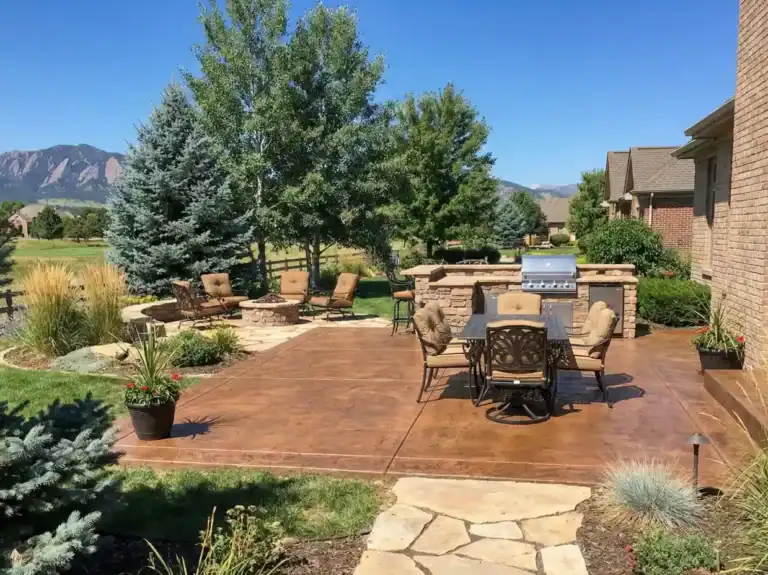
Multi-Zone Entertaining Spaces
Larger patios benefit from defined zones for different activities:
- Dining zone — Space for a table and chairs, typically 12×12 feet minimum for a 6-person table
- Lounge zone — Area for comfortable seating, conversation, and relaxing
- Cooking zone — Space for a grill or outdoor kitchen setup
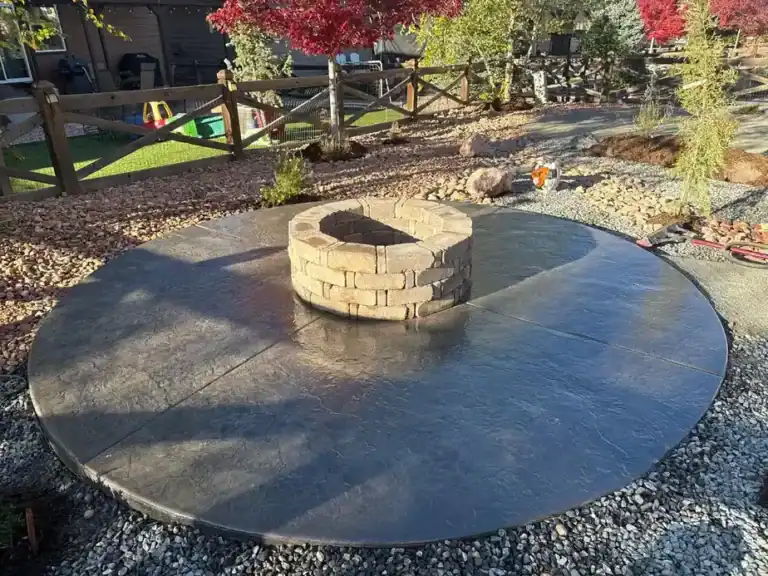
- Fire feature zone — Gathering area around a fire pit or fireplace
You can define zones using different stamp patterns, colors, or decorative borders. For example, a flagstone-pattern main patio with a contrasting brick border around the dining area.
Fire Pit Integration
Fire pits extend your patio season significantly in Colorado—those crisp fall evenings and cool summer nights become prime outdoor time. Options include:
- Built-in fire pits — Constructed as part of the patio with matching concrete or stone
- Freestanding fire pits — Portable units placed on a heat-resistant pad
- Fire tables — Combination fire feature and table surface
If you want a built-in fire pit, plan for it during the initial patio design. The area beneath and around the fire pit needs proper preparation and heat-resistant materials. Adding a built-in fire pit later is possible but more expensive than including it in the original pour.
Outdoor Kitchen Areas
Colorado’s long outdoor season makes outdoor kitchens a worthwhile investment. Concrete patios provide the solid, level foundation these installations require. Common outdoor kitchen elements include:
- Built-in grill with counter space
- Outdoor refrigerator
- Sink with running water
- Storage cabinets
- Bar seating
For outdoor kitchens, consider a 5-inch patio thickness to support the additional weight of counters, appliances, and stone veneer.
Decorative Borders and Banding
Adding a decorative border is one of the most cost-effective ways to elevate a basic concrete patio. Options include:
- Stamped borders — A stamped pattern border (6-12 inches wide) around a broom-finish center
- Color banding — Contrasting colored concrete bands that define edges or separate zones
- Exposed aggregate borders — Textured borders around smoother interior sections
Borders add visual interest without the cost of stamping the entire patio surface.
Curved vs. Geometric Layouts
Concrete can be formed into virtually any shape:
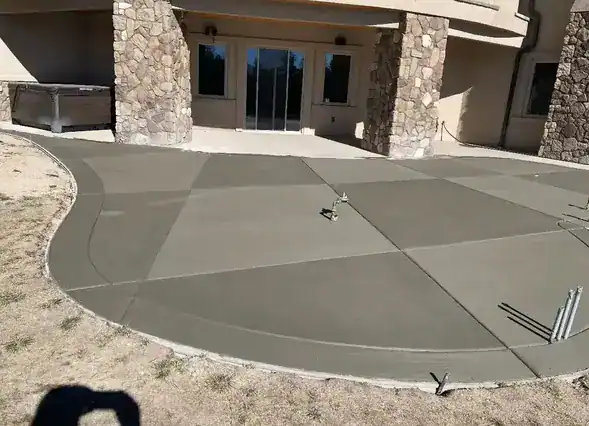
Curved designs create a softer, more organic feel that flows with landscaping. Curves work well for patios integrated with garden beds, water features, or natural terrain.
Geometric designs with clean angles and straight lines suit modern architecture and formal landscapes. Bold angles and artistic patterns can turn your patio into a statement piece.
Sizing Your Patio
Getting the size right is crucial—too small feels cramped, too large wastes money and may overwhelm your yard.
Small Patio: 100-150 sq ft
Accommodates a bistro table for 2-4 people or a couple of lounge chairs. Good for smaller yards or secondary seating areas. Typical dimensions: 10×10 to 10×15 feet.
Medium Patio: 200-300 sq ft
The most common size for Colorado homes. Fits a 6-person dining set plus some lounge seating. Typical dimensions: 12×18 to 15×20 feet. This is the sweet spot for most families.
Large Patio: 400-600 sq ft
Room for multiple zones—dining, lounging, and cooking. Can accommodate larger gatherings of 12-15+ people comfortably. Typical dimensions: 20×20 to 20×30 feet.
Outdoor Living Space: 600+ sq ft
Full outdoor rooms with dedicated zones for dining, cooking, fire features, and lounging. Often includes built-in features like outdoor kitchens, fireplaces, or seating walls.
Plan for about 25 square feet per person for comfortable entertaining. If you regularly host 10-12 people, aim for at least 250-300 square feet of patio space.
Colorado-Specific Requirements
A patio built for Arizona won’t hold up in Colorado. Our unique climate demands specific construction practices.
Air-Entrained Concrete is Essential
Colorado’s Front Range experiences over 100 freeze-thaw cycles per year. Air-entrained concrete contains microscopic air bubbles (typically 5-7% air content, with 6% being the industry standard per ASTM C260) that give freezing water room to expand without cracking the concrete from within.
Any contractor who doesn’t mention air entrainment doesn’t understand Colorado conditions. This isn’t optional—it’s the difference between a patio that lasts decades and one that spalls and flakes within a few years.
Proper Thickness
For patios with foot traffic only, 4 inches of concrete with reinforcement is the industry standard. However, Colorado’s challenging conditions often warrant going thicker:
- 4 inches — Adequate for foot traffic on stable soil with proper reinforcement
- 5 inches — Recommended for Colorado’s clay soils or if you’ll have heavy planters, hot tubs, or outdoor kitchen features
Increasing thickness by one inch improves load capacity by up to 50%—a worthwhile investment given our soil conditions.
Reinforcement
Wire mesh or rebar reinforcement helps control cracking from temperature fluctuations and soil movement. For Colorado patios, reinforcement isn’t optional—it’s essential for long-term performance.
Base Preparation
Colorado’s expansive clay soils expand when wet and contract when dry, creating movement that can crack concrete. Proper preparation includes:
- Excavating unstable topsoil
- Installing 4-6 inches of compacted gravel base
- Ensuring proper drainage away from the slab
Control Joints
Control joints (the lines cut into concrete) give the slab predetermined places to crack as it expands and contracts with temperature changes. Proper joint spacing prevents random, unsightly cracks. Joints should be placed every 8-10 feet in both directions.
Sealing
Colorado’s intense UV radiation and low humidity accelerate surface deterioration. A quality penetrating sealer protects against moisture intrusion, staining, and UV damage. Plan to reseal:
- Standard concrete: Every 2-3 years
- Stamped concrete: Every 2-3 years (critical for protecting color)
- Exposed aggregate: Every 2-3 years
Cost Overview
Concrete patio costs in Colorado typically run higher than national averages due to our soil conditions and climate requirements. Here’s what to expect:
Cost by Finish Type
- Broom finish: $6-12 per square foot
- Colored concrete: $8-15 per square foot
- Exposed aggregate: $10-18 per square foot
- Stamped concrete: $12-25 per square foot
- Complex stamped with multiple colors: $18-30 per square foot
Sample Project Costs
For a 300 square foot patio (a common medium size):
- Broom finish: $1,800 – $3,600
- Colored concrete: $2,400 – $4,500
- Exposed aggregate: $3,000 – $5,400
- Stamped concrete: $3,600 – $7,500
These prices assume standard site conditions. Additional costs may apply for demolition of existing surfaces, significant grading, drainage solutions, or difficult access.
Concrete contractors are busiest May through September. Scheduling for late April, early May, or October can sometimes yield better pricing and scheduling flexibility—just ensure temperatures remain above 40°F during and after the pour.
Maintaining Your Concrete Patio
Proper maintenance protects your investment and keeps your patio looking great:
- Clean annually: Power wash once per year to remove dirt, debris, and organic growth
- Reseal every 2-3 years: Apply penetrating sealer before winter (September-October is ideal)
- Address cracks promptly: Fill small cracks before they allow water penetration and grow larger
- Avoid harsh deicers: Use sand for traction; if you must use deicer, plain rock salt is least damaging to concrete
- Remove snow: Clear snow within 24 hours to reduce moisture penetration and freeze-thaw stress
- Protect from furniture: Use furniture pads to prevent scratching and rust stains
- Popular styles include broom finish ($6-12/sq ft), stamped ($12-25/sq ft), exposed aggregate ($10-18/sq ft), and colored concrete ($8-15/sq ft)
- Most popular stamped patterns: ashlar slate, flagstone, wood plank, and cobblestone
- Average Colorado patio size is 200-300 square feet; plan for 25 sq ft per person for entertaining
- Colorado patios require air-entrained concrete, proper reinforcement, and 4-6 inch gravel base
- Consider 5-inch thickness for heavy features or problematic soil
- Seal every 2-3 years to protect against UV damage and freeze-thaw cycles
- Earth tones (tan, brown, terra cotta, gray) are most popular and complement Colorado landscapes
- A properly installed concrete patio can last 25-30+ years with basic maintenance
Ready to Design Your Patio?
Get Free EstimateRelated: Concrete Patios | Stamped Concrete | Concrete Driveways