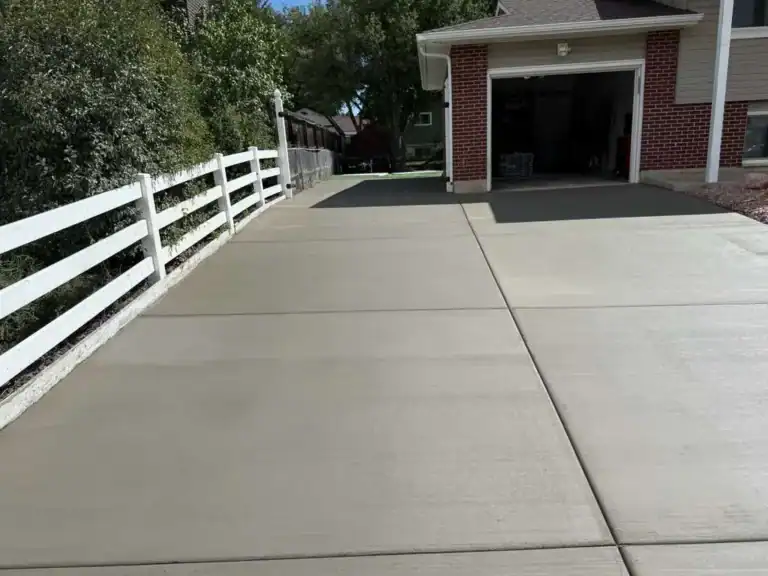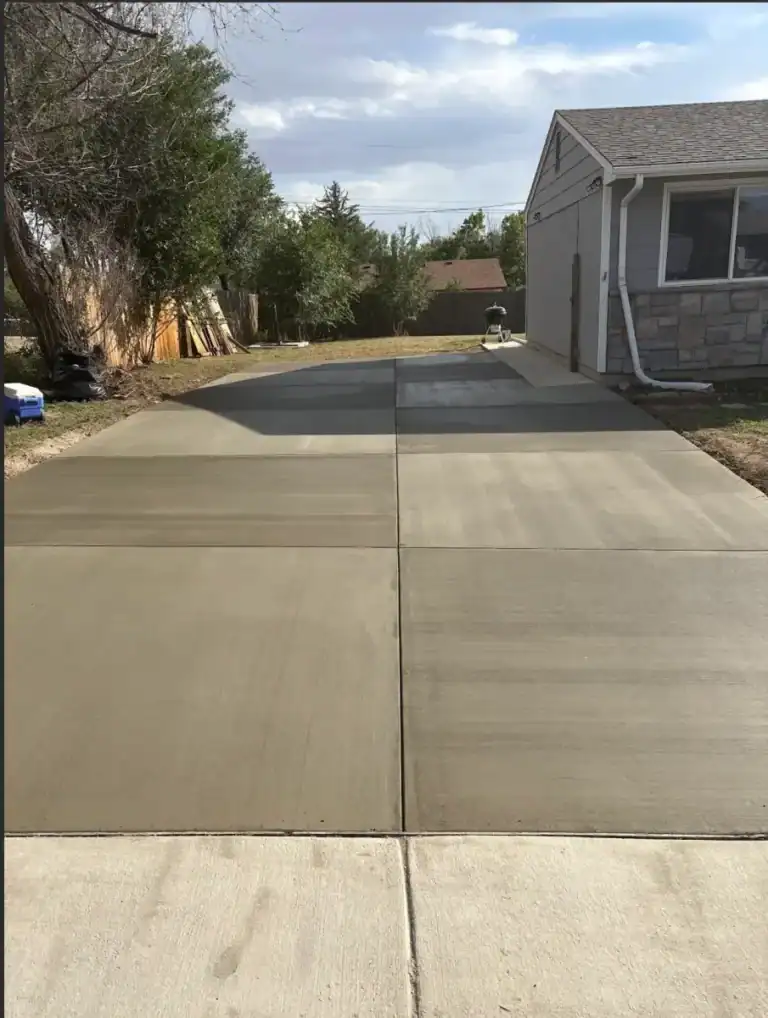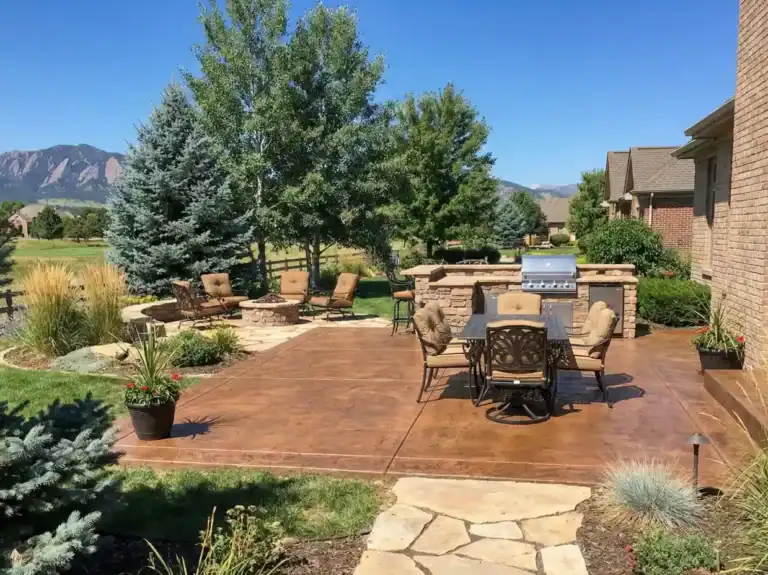
Timing is everything when it comes to pouring concrete in Colorado. Our high altitude, intense sun, dramatic temperature swings, and unpredictable weather create challenges that don’t exist in most other parts of the country. Pour at the wrong time, and you risk cracking, weak concrete, or a surface that fails within a few years. Get the timing right, and your driveway or patio can last 25-30 years.
This guide covers exactly when to pour concrete in Colorado—the best months, ideal temperatures, and weather conditions to watch for.
The best time to pour concrete in Colorado is late April through early October, with late spring (May-June) and early fall (September-October) being ideal. Aim for temperatures between 50°F and 70°F, and avoid days when temperatures will drop below 40°F within 24 hours of the pour.
Why Timing Matters More in Colorado
Colorado’s climate creates unique challenges for concrete work that contractors in milder regions don’t face:
High Altitude Effects
At 5,000 to 6,000+ feet elevation, Denver and Colorado Springs have thinner air, more intense UV radiation, and lower humidity than sea-level locations. These conditions cause concrete to dry faster on the surface, which can lead to:
- Premature surface drying before proper hydration occurs
- Plastic shrinkage cracking from rapid moisture loss
- Uneven curing between the surface and interior
- Reduced long-term strength if not properly managed
Research shows concrete cured at high altitude with low humidity can lose strength compared to concrete cured under normal conditions. Quality contractors compensate with curing compounds, evaporation retarders, and careful timing.
Extreme Temperature Swings
Colorado regularly sees 40-50 degree temperature changes in a single day. A spring day might reach 65°F in the afternoon but drop to 25°F overnight. This creates serious risks for fresh concrete that hasn’t fully cured.
The Front Range experiences over 100 freeze-thaw cycles annually—far more than most regions. According to NOAA engineering data, Denver averages approximately 105 cycles per year. If concrete freezes before it reaches adequate strength, the damage is permanent and irreversible.
The Ideal Temperature Range
Concrete cures through a chemical reaction called hydration, not simply by “drying.” This reaction is highly sensitive to temperature.
Experts agree that 50°F to 60°F is the ideal temperature range for pouring concrete. At these temperatures:
- Hydration proceeds at an optimal rate
- Water evaporates slowly enough for proper curing
- The concrete develops maximum strength
- Finishing time is adequate without rushing
A slightly broader acceptable range is 40°F to 90°F, but temperatures at either extreme require special precautions.
What Happens When It’s Too Cold
The American Concrete Institute (ACI) defines cold weather concreting as any time temperatures fall to or are expected to fall below 40°F during the curing period.
Concrete must reach a compressive strength of at least 500 PSI before it can safely tolerate freezing—even once. At 50°F, this takes approximately 48 hours. If concrete freezes before reaching this threshold, it can lose up to 50% of its potential strength permanently.
Cold weather problems include:
- Slowed hydration: Below 50°F, the chemical reaction slows significantly. Below 40°F, it nearly stops.
- Freezing damage: Water in fresh concrete expands 9% when it freezes, creating internal cracks and weak spots.
- Extended cure times: What takes 2 days at 50°F might take a week at 40°F.
- Surface defects: Frozen concrete often develops scaling, spalling, and surface weakness.
What Happens When It’s Too Hot
Hot weather creates different but equally serious problems. The ACI sets a maximum concrete temperature of 95°F at discharge, though many specifications use 90°F as a more conservative limit.
Hot weather problems include:
- Rapid setting: Concrete sets too fast, leaving insufficient time for proper finishing
- Plastic shrinkage cracking: Surface moisture evaporates faster than bleed water can replace it, causing cracks
- Reduced strength: Concrete cured at high temperatures develops lower 28-day strength than concrete cured at moderate temperatures
- Thermal cracking: Large temperature differentials between the surface and interior cause internal stress
When temperatures exceed 85°F, quality contractors pour in the early morning (before 10 AM) or evening (after 6 PM), use cooler mix water, and apply evaporation retarders immediately after finishing.
Best Months to Pour Concrete in Colorado
Based on Colorado’s climate patterns, here’s a month-by-month breakdown:
Ideal Months: May, June, September, October
These months offer the best combination of moderate temperatures, lower humidity, and manageable weather patterns.
May and June bring warming temperatures that typically stay within the 50-75°F range. The risk of late-season snow decreases significantly after mid-May, though Colorado can surprise you—blizzards have occurred as late as early May in some years.
September and October are often considered the best months for concrete work in Colorado. Daytime temperatures are typically mild (60-75°F), humidity is low, and the intense summer heat has passed. The main challenge is watching for early cold fronts and planning around the possibility of early snow.
March-April: Risky
Highly unpredictable. Snow is common through mid-April, with wide temperature swings. March is often Colorado’s snowiest month. Possible but requires careful weather monitoring and cold-weather precautions.
May-June: Excellent
Ideal conditions for most of these months. Temperatures typically 50-75°F. Risk of late snow decreases significantly after mid-May. Morning pours work well before afternoon heat.
July-August: Good with Precautions
Hot weather requires early morning or evening pours. Temperatures often exceed 85°F in the afternoon. Monsoon season brings afternoon thunderstorms—watch the forecast closely.
September-October: Excellent
Often the best time to pour. Moderate temperatures, low humidity, minimal precipitation. Cold-weather protection may be needed for overnight curing later in October.
November-February: Challenging
Cold weather concreting techniques required. Possible with heated enclosures, insulated blankets, and accelerating admixtures—but adds cost and risk. Best reserved for urgent projects.
Weather Factors Beyond Temperature
Temperature is critical, but it’s not the only weather factor that affects concrete quality.
Rain
Rain is concrete’s enemy during and immediately after pouring.
Before pouring: Never pour concrete on rain-soaked ground. Excess moisture in the subgrade can compromise the concrete’s structural integrity and change the water-cement ratio at the bottom of the slab.
During pouring: Rain falling on fresh concrete washes cement paste from the surface, causing scaling, dusting, and reduced strength. If rain is forecast, delay the pour.
After pouring: Fresh concrete needs 4-8 hours minimum before it can handle light rain without damage. For full resistance, 24-48 hours is better. The first few hours after pouring are the most critical.
If rain is possible within 24 hours of a scheduled pour, have plastic sheeting ready to cover the fresh concrete immediately. For the subgrade, cover the area with plastic a day or two before the pour if heavy rain is forecast.
Wind
Wind accelerates surface evaporation, which can cause plastic shrinkage cracking—especially in Colorado’s low humidity. When wind speeds exceed 15 mph, the risk increases significantly.
Problems from wind include:
- Rapid surface drying before proper hydration
- Plastic shrinkage cracks (often appearing as a random pattern of fine cracks)
- Difficulty achieving a proper finish
- Dust and debris contamination
Solutions include wind screens, evaporation retarders (fog spray or chemical films), and timing pours for calmer morning hours.
Humidity
Colorado’s characteristically low humidity accelerates surface drying. Combined with our high altitude and intense sun, this creates conditions where evaporation can easily exceed the rate at which bleed water rises to the surface.
Quality contractors in Colorado use curing compounds or cure-and-seal products applied immediately after finishing to retain moisture and prevent shrinkage cracking.
Time of Day Matters
The best time of day to pour depends on the season:
Spring and Fall
Mid-morning to early afternoon typically works well. You want the concrete to set and gain initial strength during the warmest part of the day, then maintain adequate temperature through the night.
Summer
Early morning (before 10 AM) is best to avoid the peak heat. Some contractors do evening pours (after 6 PM) to take advantage of cooling temperatures, though this requires careful planning for overnight curing.
Winter
Late morning is often preferred to maximize the limited warm daylight hours. The concrete needs time to gain strength before overnight temperatures drop.
Don’t just check tomorrow’s weather—look at the 7-day forecast. Concrete needs consistent curing conditions for at least 48-72 hours, and ideally 7 days, to develop adequate strength. A warm pour day followed by a hard freeze two days later can still cause damage.
Concrete Curing Timeline
Understanding how concrete gains strength helps you plan around weather and know when your new driveway or patio is ready for use.
24-48 Hours: 20-30% Strength
Surface has set enough for light foot traffic. Still very vulnerable to freezing, rain, and damage. Keep traffic off and protect from weather.
7 Days: 70-75% Strength
The “70 in 7” rule. Safe for vehicle traffic on driveways. Most critical curing period is complete, but concrete continues strengthening.
28 Days: Full Design Strength
Industry standard for measuring compressive strength. A 4,000 PSI mix should reach 4,000 PSI by this point. Concrete actually continues gaining strength slowly for years.
For Colorado driveways: Wait at least 7 days before driving on new concrete, and 14 days is even better given our freeze-thaw exposure. Don’t park heavy vehicles or RVs on the surface until after 28 days.
Off-Season Advantages: Pricing and Availability
While spring and fall offer the best weather, there are practical advantages to scheduling during slower periods.
Peak Season (May-September)
- Best weather conditions
- Highest demand = longer wait times for scheduling
- Peak pricing (often 15-25% higher than off-season)
- Contractors may be rushed between jobs
Off-Season (November-February)
- Challenging weather requires special techniques
- Lower demand = better availability
- 5-15% discounts commonly offered
- More contractor attention per project
If your project can tolerate the risks and added precautions of cold-weather concreting, booking in late fall or winter can save money. However, the weather-related risks and potential for delays often make spring or fall the better value despite higher pricing.
Shoulder Season Sweet Spot
Late October and early April can offer a middle ground: moderate weather with somewhat lower demand than peak summer months. Prices may be slightly lower, and scheduling is often easier—but watch the forecast carefully.
What If You Must Pour in Challenging Conditions?
Sometimes project timelines don’t allow waiting for perfect weather. Here’s what experienced Colorado contractors do:
Cold Weather Techniques
- Heated enclosures: Temporary structures with heaters maintain adequate temperature
- Insulated blankets: Cover fresh concrete to retain heat during curing
- Hot water in the mix: Raises initial concrete temperature
- Accelerating admixtures: Speed up hydration so concrete reaches 500 PSI faster
- Higher cement content: Generates more heat during hydration
These techniques add cost—typically $15-25 per cubic yard for admixtures, plus labor for blankets and monitoring.
Hot Weather Techniques
- Cooler mix water or ice: Lowers initial concrete temperature
- Set-retarding admixtures: Slow down hydration for more working time
- Evaporation retarders: Spray-applied products reduce surface moisture loss
- Fog misting: Adds humidity without adding water to the surface
- Wet curing: Keep concrete moist for at least 7 days
- Sunshades and windbreaks: Reduce environmental stress
Questions to Ask Your Contractor
When scheduling concrete work in Colorado, ask your contractor these questions:
- What’s your weather cutoff? (Most won’t pour if temps will drop below 35-40°F within 24 hours)
- How do you handle sudden weather changes? (Colorado weather can shift rapidly)
- What curing methods do you use? (Curing compounds are essential in Colorado’s dry climate)
- Do you use air-entrained concrete? (Critical for freeze-thaw resistance)
- What’s the backup plan if weather forces a delay?
- How long should I wait before using the surface?
- Best months in Colorado: May-June and September-October
- Ideal temperature: 50-60°F (acceptable range: 40-90°F)
- Avoid pouring if temps will drop below 40°F within 24 hours
- Concrete must reach 500 PSI before it can safely freeze (about 48 hours at 50°F)
- Colorado’s altitude and low humidity accelerate surface drying—curing compounds are essential
- Wait 7-14 days before driving on new concrete
- Off-season (Nov-Feb) offers 5-15% discounts but requires cold-weather techniques
- Always check the 7-day forecast, not just tomorrow’s weather
Plan Your Project for Success
The best concrete projects in Colorado start with good timing. By scheduling your pour during favorable weather conditions and working with a contractor who understands our unique climate challenges, you’ll get a driveway or patio that performs well for decades.
If you’re planning a concrete project, start getting quotes 4-6 weeks before your ideal pour date—earlier during peak season. This gives you flexibility to schedule around weather and ensures you’re not rushing the decision.
Ready to Schedule Your Concrete Project?
Request Free EstimateRelated: Concrete Driveways | Concrete Patios | Stamped Concrete