If you’re comparing stamped concrete and pavers for a patio or driveway, the first question is almost always the same: which one costs less? This guide gives you real Colorado Springs pricing for both, what each surface costs to own after installation, and how each one handles our freeze-thaw winters, so you can pick the right surface rather than just the cheaper quote.
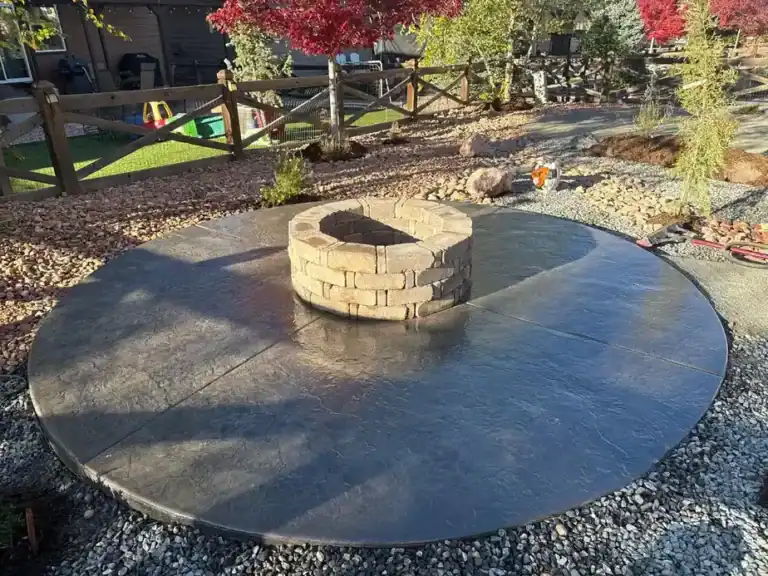
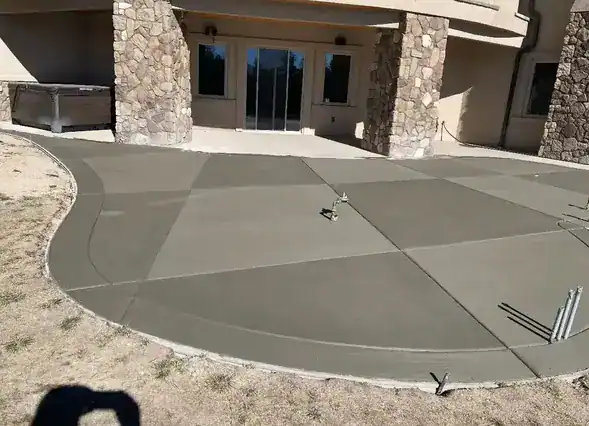
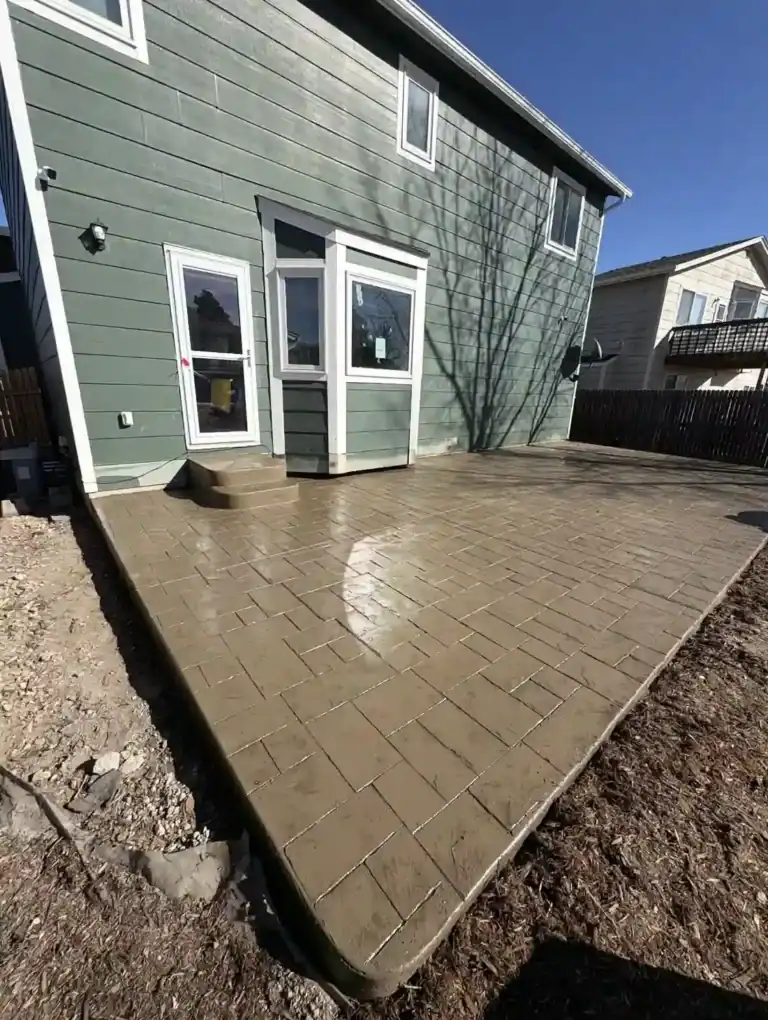
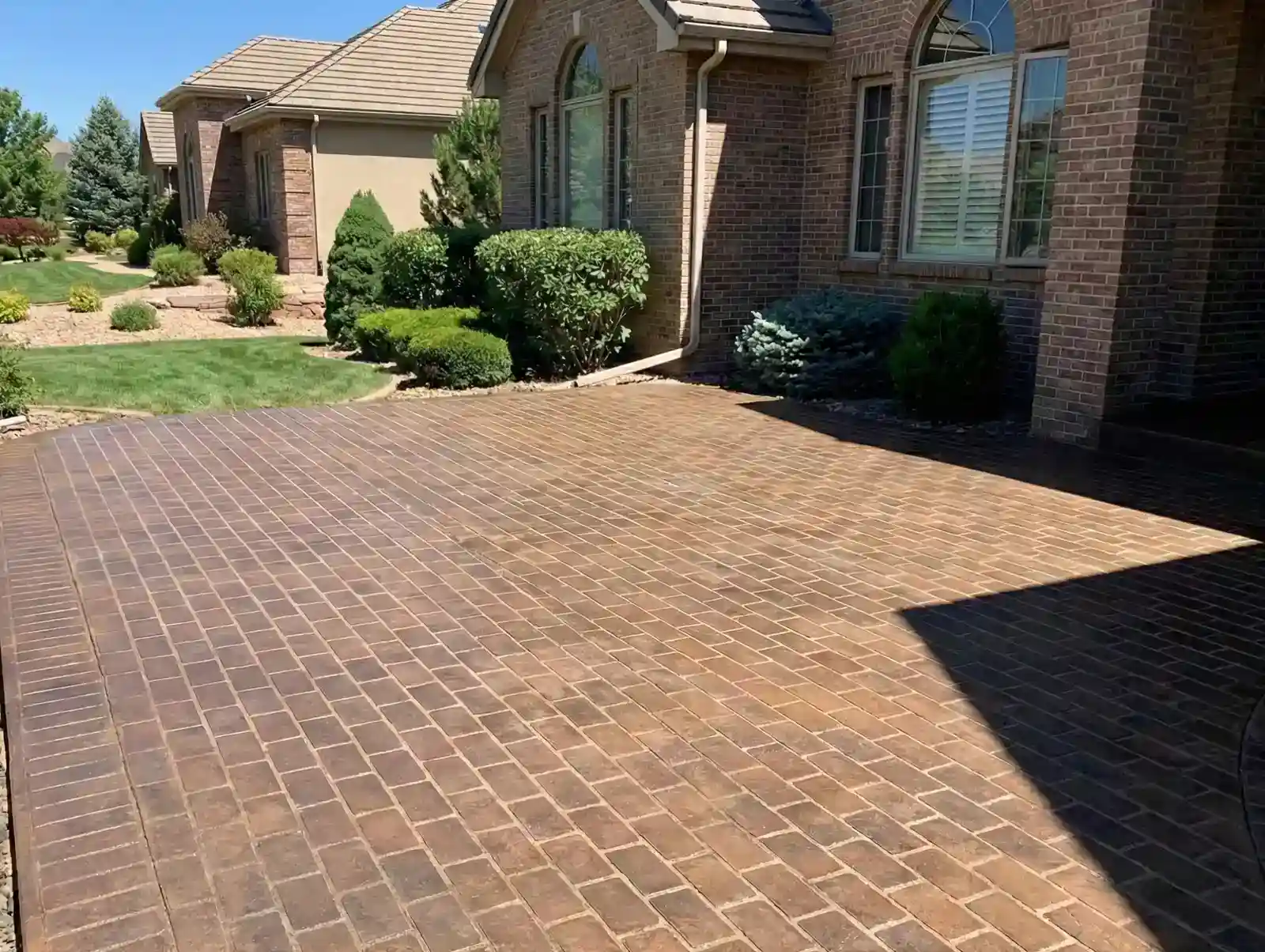
In Colorado Springs, stamped concrete and quality pavers land in the same price range. Plain broom-finish concrete runs about $20 per square foot at a typical patio size (less on large pours), and stamped concrete commonly runs 1.25 to 2 times that, roughly $25-40 per square foot. Concrete pavers run $18-30, brick $20-35, and natural stone $30-50+ installed. A simple stamped pattern in one color on a larger slab can come in under pavers; premium multi-color stamped work costs more than concrete pavers and less than natural stone. The real difference between them is the surface, not the price.
Stamped Concrete vs Pavers: Cost per Square Foot (2026)
These are installed prices for the Colorado Springs area, including tear-out where needed, grading, and finishing. National averages you’ll see online run lower because they don’t reflect the air-entrained mix and reinforcement Colorado’s climate requires.
| Surface | Installed Cost per Sq Ft | 400 Sq Ft Patio |
|---|---|---|
| Plain broom-finish concrete (reference) | About $20 (less on large pours) | About $8,000 |
| Stamped concrete (1.25-2x plain) | $25 – $40 | $10,000 – $16,000 |
| Concrete pavers | $18 – $30 | $7,200 – $12,000 |
| Brick pavers | $20 – $35 | $8,000 – $14,000 |
| Natural stone pavers | $30 – $50+ | $12,000 – $20,000+ |
Where a stamped project lands in its range depends on pattern, color, and size. A single pattern like ashlar or roman slate in one earth tone is the low end. Two-tone color, borders, and busy patterns push toward the high end. Large pours bring the per-foot number down because the fixed costs of the day spread over more concrete.
We price every project at a $6,500 minimum. Mobilization, forming, the pump truck, and stamping setup cost nearly the same on a small pour as a mid-size one, so very small patios don’t price out proportionally. If you’re planning a patio, sizing it generously gets you the best cost per square foot.
For a deeper breakdown of stamped pricing and add-ons like borders and steps, see our stamped concrete patio cost guide. Driveway numbers are in our concrete driveway cost guide.
Cost of Ownership After Installation
Both surfaces need upkeep, and it’s different upkeep.
- Stamped concrete: Sealed about three weeks after the pour (included in our stamped pricing) and resealed every 2-3 years to protect the color from Colorado’s sun. That’s the one recurring cost, and it isn’t optional. Cracks are rare on a properly built slab and inexpensive to fill, but a repair never quite disappears on a stamped pattern.
- Pavers: Joint sand washes out and needs replenishing every few years, or polymeric sand that lasts longer. Weeds find the joints. Sections settle and need lifting and resetting to stay flat. The upside is repairs: a damaged paver pops out and a new one drops in with no visible patch, if you saved extras from the install.
Longevity is the pavers’ strongest argument. Quality pavers last 30-50+ years versus 25-30 for stamped concrete. If you’re in your forever home and think in cost per year of service, pavers close the gap the longer you stay. If your horizon is 10-20 years, both will still look good when you sell.
Durability and Freeze-Thaw: What Colorado’s Climate Does to Each
The Front Range sees well over 100 freeze-thaw cycles a year. Water gets into a surface, freezes, expands about 9%, and pries at whatever contains it. This is the biggest factor in how outdoor surfaces age here.
Stamped Concrete in Freeze-Thaw
Stamped concrete is one rigid, continuous slab, so freeze-thaw stress shows up as scaling or cracking over time if the slab wasn’t built right. Built right, it lasts decades. In Colorado that means air-entrained 4,000 PSI concrete (microscopic bubbles that give freezing water room to expand), fiber rebar in a tied grid to hold any crack tight, control joints cut the same day so cracking happens where it’s planned instead of across the pattern, and ground that’s graded and compacted so water drains off the slab instead of under it.
Pavers in Freeze-Thaw
Pavers are designed to move. Individual units flex with frost heave instead of cracking, joints drain water instead of pooling it, and pavers manufactured to ASTM C936 hit 8,000 PSI, denser and less absorbent than poured concrete. That’s a genuine durability advantage. The trade-off is the joints themselves: sand washes out, weeds move in, and sections settle unevenly and need resetting. Pavers handle freeze-thaw better, but they’re not maintenance-free here either.
Snow Removal: The Difference Nobody Mentions
Stamped concrete is a seamless surface. A shovel or snowblower glides across it in one pass. Pavers have hundreds of joints and slight height differences between units; shovel blades catch on edges, snowblower skids scatter joint sand into the yard, and a metal blade can chip a raised paver. On a driveway you’ll clear 20+ times a winter for decades, that adds up. One caution for both: skip magnesium chloride and salt. Sand for traction is safer on concrete and pavers alike.
Which Should You Choose?
Choose stamped concrete if you want a seamless surface with no joint lines, no weeds, and easy snow removal; if you want the look of stone at a fixed, predictable price; or if a large area is involved, where stamped concrete’s per-foot price drops and pavers’ labor doesn’t.
Choose pavers if you’re in your forever home and want the longest possible service life; if invisible repairs matter to you; or if you need to use the surface immediately, since pavers take traffic the day they’re finished while stamped concrete needs 7-14 days before vehicles.
Stamped Concrete vs Pavers: Cost FAQs
Is stamped concrete cheaper than pavers?
Not by default. In Colorado Springs, stamped concrete runs roughly $25-40 per square foot and pavers $18-35, so the ranges overlap. A simple stamped pattern on a larger slab can come in below concrete pavers; premium stamped work costs more than concrete pavers and less than natural stone.
How much does a 400 sq ft stamped concrete patio cost compared to pavers?
A 20×20 (400 sq ft) stamped concrete patio runs about $10,000-$16,000 in Colorado Springs. The same patio in concrete pavers runs $7,200-$12,000, brick $8,000-$14,000, and natural stone $12,000-$20,000 or more.
Do pavers last longer than stamped concrete in Colorado?
Generally yes. Pavers’ jointed design flexes with freeze-thaw and frost heave instead of cracking, and ASTM C936 pavers are denser than poured concrete. Properly built stamped concrete, air-entrained 4,000 PSI with fiber rebar and correctly cut joints, still delivers 25-30 years in our climate.
- Colorado Springs installed pricing: stamped concrete about $25-40/sq ft (1.25-2x plain), pavers $18-35/sq ft. The ranges overlap; neither is cheaper by default
- 400 sq ft patio: about $10,000-$16,000 stamped vs $7,200-$14,000 for concrete or brick pavers
- Stamped concrete needs resealing every 2-3 years; pavers need joint sand, weed control, and occasional resetting
- Pavers last longer (30-50+ years vs 25-30) and repair invisibly
- Stamped concrete is seamless: no weeds, no shifting units, easy snow removal, and a better per-foot price on large areas
- Choose on the surface you want to live with, not on a few dollars per square foot
Get Real Numbers for Your Project
Ranges are useful for budgeting, but your actual price depends on size, access, grade, and the pattern you choose. We’re stamped concrete specialists in Colorado Springs. We’ll measure your space and give you an exact quote, and if your situation genuinely calls for pavers instead, we’ll tell you that straight.
Get an Exact Price for Your Project
Request Free EstimateRelated: Stamped Concrete Patio Cost Guide | Concrete Patio Cost | Stamped Concrete Guide | Stamped Concrete Colorado Springs | Concrete Patios