Turn your gravel driveway into asphalt, and be done with the grading.
Gravel-to-asphalt driveway paving for acreage and mountain properties around Colorado Springs — Black Forest, Falcon, Peyton, Monument, Larkspur, and up Ute Pass to Woodland Park. No more dust, washboard, spring ruts, or gravel plowed into the yard.
Rated 5.0 by Colorado homeowners
Had a great experience with Crestone! John was super responsive and fair in bidding the installation of a hot tub pad, sidewalk, and stoop for my house.
Work was great every thing was smooth from the estimate to the completion would highly recommend
Had a great experience with this team, really enjoyed working with John to really capture what I wanted done for my patio. Great team and even better people. Highly recommend them!!
Your gravel may already be half the job
A gravel driveway that has carried traffic for years is often a good start on a paved one. That packed gravel can serve as part of the base, which is one reason paving a gravel drive usually costs less per foot than tearing out and replacing an old asphalt one. We check how deep and firm it is, add road base where it’s thin or soft, shape it, and compact it before any asphalt goes down.
What a long rural driveway needs most is a plan for water. On a gravel drive, runoff cuts ruts you grade out every spring; under asphalt, the same water causes trouble if it has nowhere to go. So the shaping matters as much as the paving: a crown or cross-slope to shed water, ditches that actually carry it, and culverts where the drive crosses a low spot. That matters most on the sloped drives around Black Forest and Woodland Park.
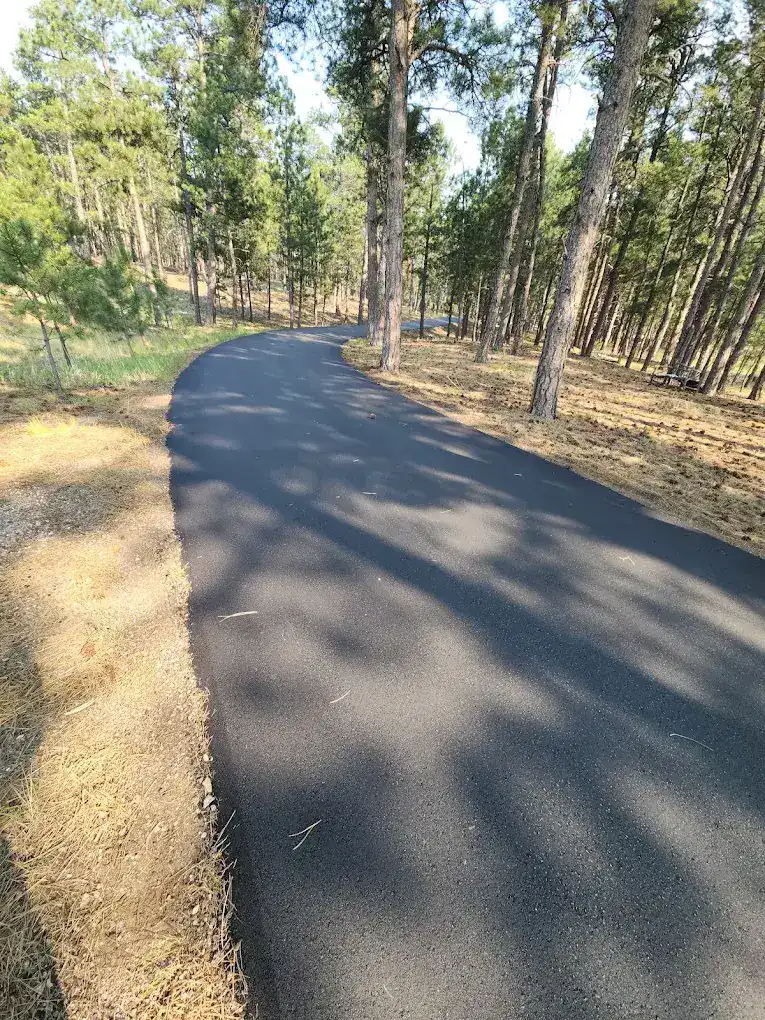
Three ways to upgrade a gravel driveway
Full asphalt paving
The whole drive shaped, compacted, and paved with hot-mix asphalt — typically 3″ compacted, more where heavy trucks or trailers run. A smooth, plowable blacktop surface from the road to the garage.
Pave the part that matters
On a long drive you don’t have to pave it all at once. Many owners start with the steep section that washes out, the stretch nearest the house, or the apron at the road, and leave the rest in gravel for now.
Recycled asphalt
Reclaimed asphalt, graded and compacted, binds together more than gravel does — less dust and fewer ruts for less money than new hot-mix. It’s a step up from gravel rather than a paved surface, and it can be paved over later.
How a gravel driveway gets paved
The same clear steps on every job — you’ll know what’s happening and why.
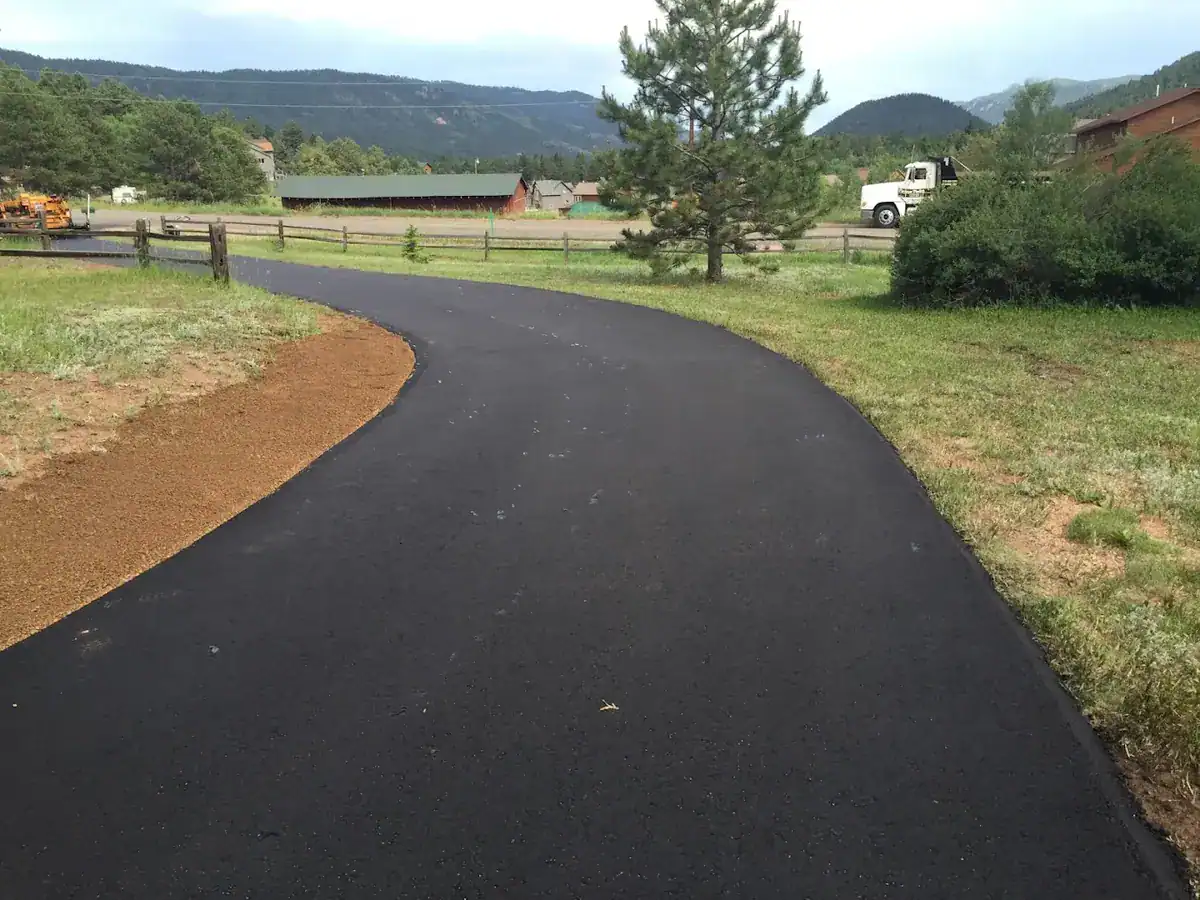
Walk the driveway
We measure length and width, check how deep and firm the existing gravel is, and look at where water runs, where it ponds, and how trucks will get in.
Written scope & price
Your estimate states the paved width and length, asphalt thickness, how much road base is being added, and any drainage work.
Shape & drain
The drive is graded to a crown or cross-slope, ditches are cleaned or cut, and low crossings are addressed so water leaves the driveway.
Build up the base
Road base is added where the gravel is thin or soft, then the whole run is compacted until it’s firm under a loaded truck.
Pave & compact
Hot-mix asphalt is placed with a paver and rolled while hot. Edges are tamped and backed up with shoulder material so they’re supported.
Walkthrough & care
We drive it with you and leave care instructions for the first few weeks while the asphalt hardens.
Every gravel-to-asphalt project, standard
- ✓Existing gravel evaluatedDepth and firmness checked before pricing.
- ✓Shaped to shed waterCrown or cross-slope, not a flat ribbon.
- ✓Road base added where neededCompacted before paving.
- ✓3″ compacted asphalt, typicalHeavier where trucks and trailers run.
- ✓Supported edgesShoulders backed up so edges hold.
- ✓Written estimate & clean-upLength, width, thickness, and base work stated.
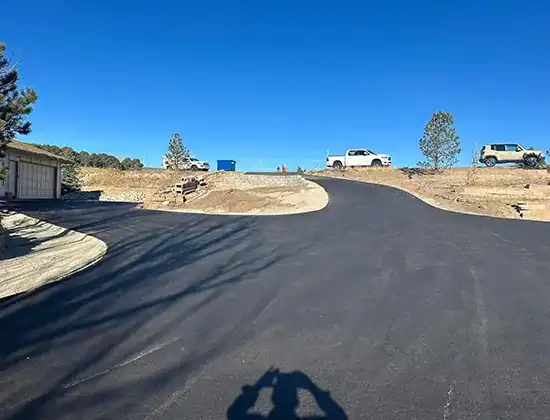
What it costs to pave a gravel driveway
Long driveways get the best per-foot pricing in asphalt, and a gravel drive in decent shape saves the cost of tearing anything out. Current per-square-foot ranges are on our asphalt driveways page; our asphalt projects start at $4,500.
A quick way to size yours: length times width. A 300-foot driveway paved 12 feet wide is 3,600 square feet. Narrowing the paved width, or paving only part of the run, are the two biggest levers on the total — and we’re glad to price it more than one way.
- ▲Length & paved widthSquare footage drives the price; 10–12 feet wide suits most single-lane drives.
- ▲Condition of the gravelDeep, firm gravel needs little added base. Thin or soft stretches need more.
- ▲Drainage workDitching, culverts at low crossings, and re-shaping a drive that has gone flat.
- ▲SlopeSteep grades take more hand work and care to pave and compact.
- ▲Distance from the plantHot asphalt is trucked from Colorado Springs; Teller County and far-east properties cost more to reach.
- ▲Truck accessTight gates, low branches, and weight-limited crossings slow delivery.
Gravel driveway paving FAQ
Can you pave asphalt over an existing gravel driveway?
How much does it cost to pave or blacktop a gravel driveway?
Do I have to pave the whole driveway?
Is recycled asphalt a good alternative to paving?
Will asphalt hold up on a steep driveway?
Do I need a permit to pave my driveway?
How long does it take to pave a gravel driveway?
Is a blacktop driveway easier to plow than gravel?
Driveway guides
Straight answers from our blog.
More asphalt services
Ready to pave the gravel?
Tell us about your project and we’ll walk the site and give you a fair, written price.